Surviving Acute Altitude Sickness in Nagqu at 4,500m: A 1:00 AM Emergency Hospital Oxygen Run
In September 2024, I solo-drove the entire Sichuan-Tibet loop (Chengdu → G318 → Lhasa → Lhasa Loop → Nagqu G317 → Chengdu, 18 days total). Despite extensive highland experience, good physical fitness, and crossing 5,130m passes with ease, I was hit by severe acute mountain sickness (AMS) in Nagqu City (那曲市, China's highest prefecture-level city at 4,500m). Here is the unfiltered, minute-by-minute field account: 3 fatal pre-bed mistakes, midnight hospital emergency rush, 5 hours on clinical wall oxygen, verified receipts, and essential survival rules.
Why I am sharing this raw emergency case study with you
I am the founder and chief itinerary planner of G318Trip.com. I love traveling across China, especially its magnificent western high plateaus and alpine valleys. Over the years, I have documented journeys with mobile cameras and aerial drones. I am not a theoretical writer—every route guide, driving distance, and altitude profile on this website is forged by real tires on tarmac.
To provide context: I have traversed the Qinghai-Tibet plateau many times, exploring both extreme passes and lower valleys. With good physical fitness, I have always had a remarkably high natural tolerance for altitude. In September 2024, I completed an 18-day solo self-drive rental car trip: driving from Chengdu along G318 to Lhasa, completing a southern loop, and returning via Nagqu along G317 to Chengdu. Across those 18 days, I suffered severe altitude sickness in only one single place: Nagqu City urban core (那曲主城区, 4,500m) on the night of September 14.
Many assume altitude sickness only targets the unfit or elderly. That is a dangerous myth. Throughout my entire 18 days, including the night I rushed to the hospital ER, I had zero illness—no cold, no fever, no underlying conditions. I was struck down in peak health because of three critical pre-bed mistakes. By sharing every unfiltered detail, I hope to keep fellow overland travelers humble, prepared, and safe on the Tibetan plateau.
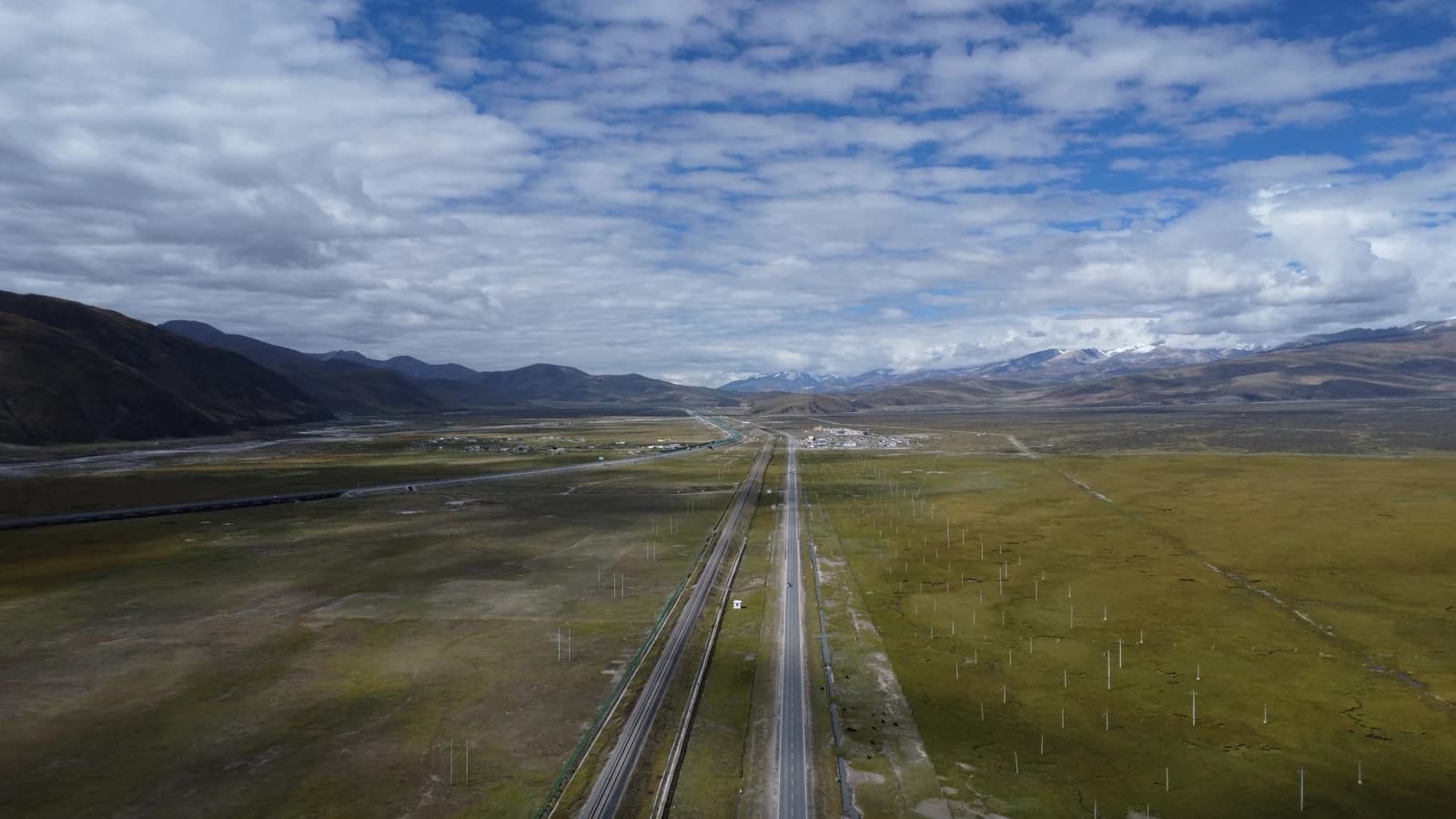
Lhasa to Nagqu: 6 Master Aerial Drone Landscapes
Captured in-flight along the G109 trans-plateau corridor heading north from Lhasa into Nagqu (4,500m). All shots displayed in full uncropped 16:9 widescreen.
DJI 0036 · Endless Sky Highway
Forward drone perspective of the asphalt highway slicing through the northern Tibet plateau under billowing storm clouds.
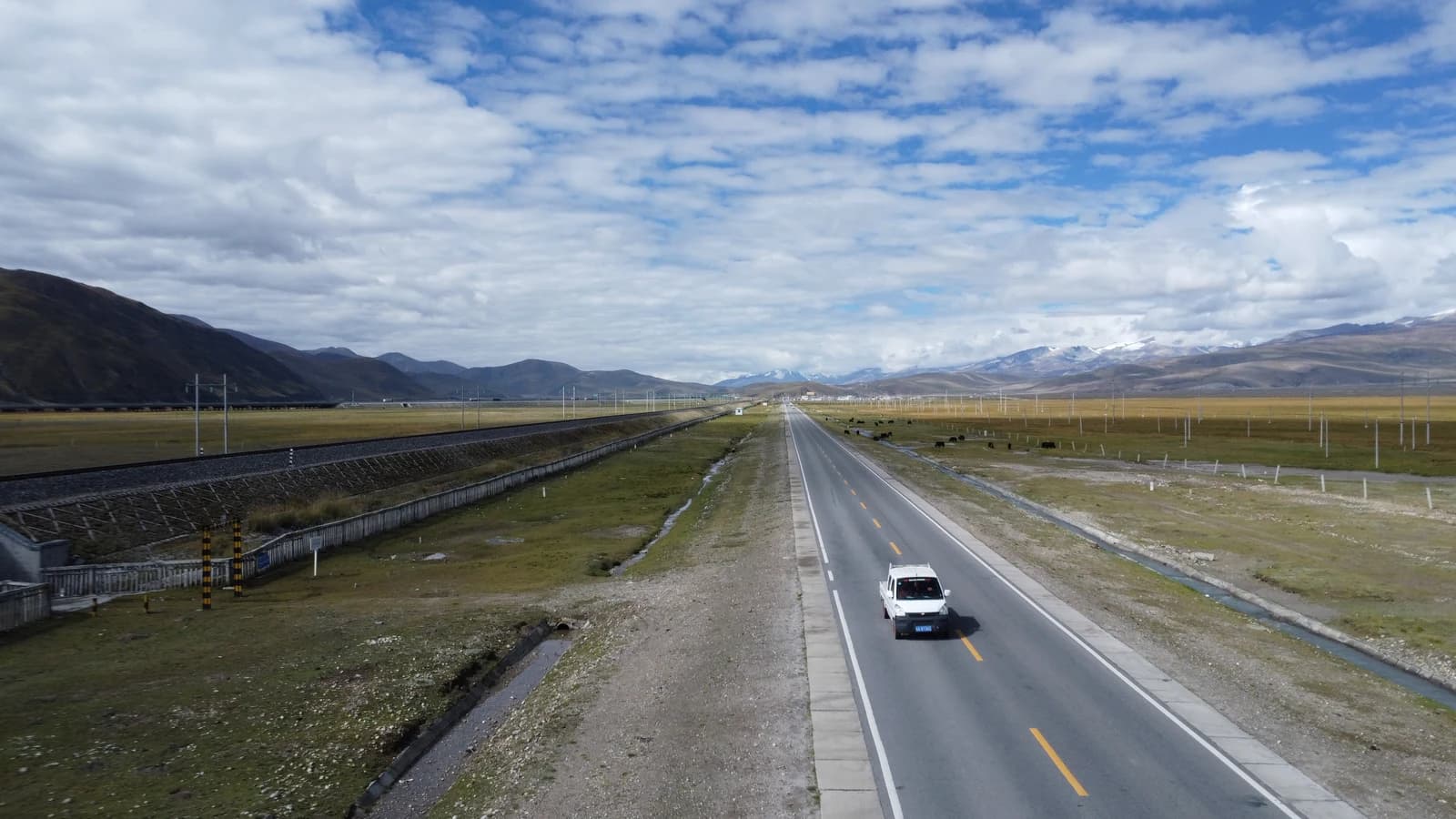
DJI 0034 · Solitary Overland Drive
Single vehicle navigating the vast open expanse between Lhasa and Damxung with grazing plains stretching to distant ridges.
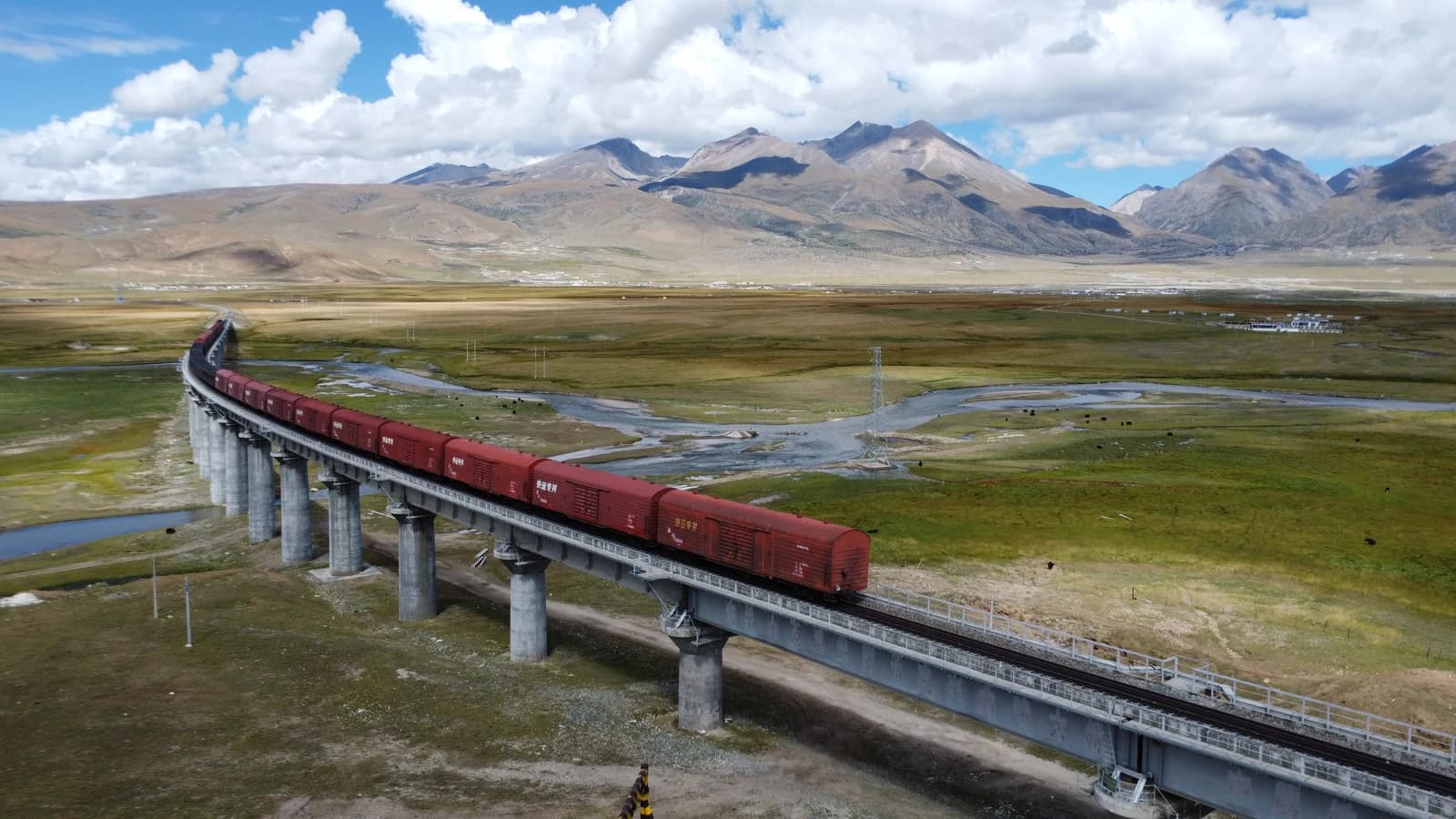
DJI 0066 · Sky Railway Transit
The iconic Qinghai-Tibet railway viaduct spanning high-altitude marshlands as a freight train heads across the plateau.
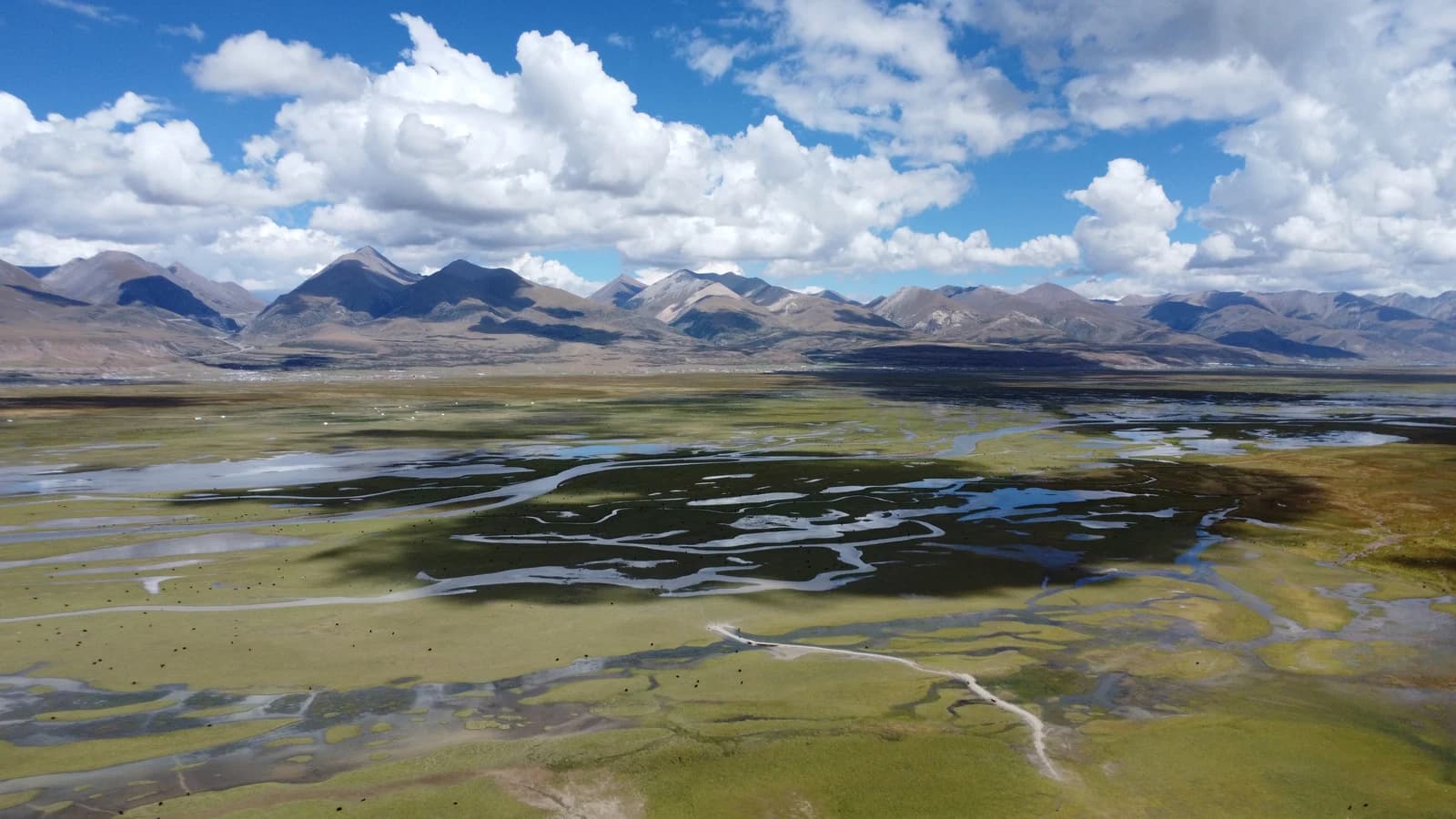
DJI 0083 · Cloud-Mirroring Wetlands
Vast pristine alpine wetlands in northern Tibet with braided waterways reflecting towering clouds and high mountain ridges.
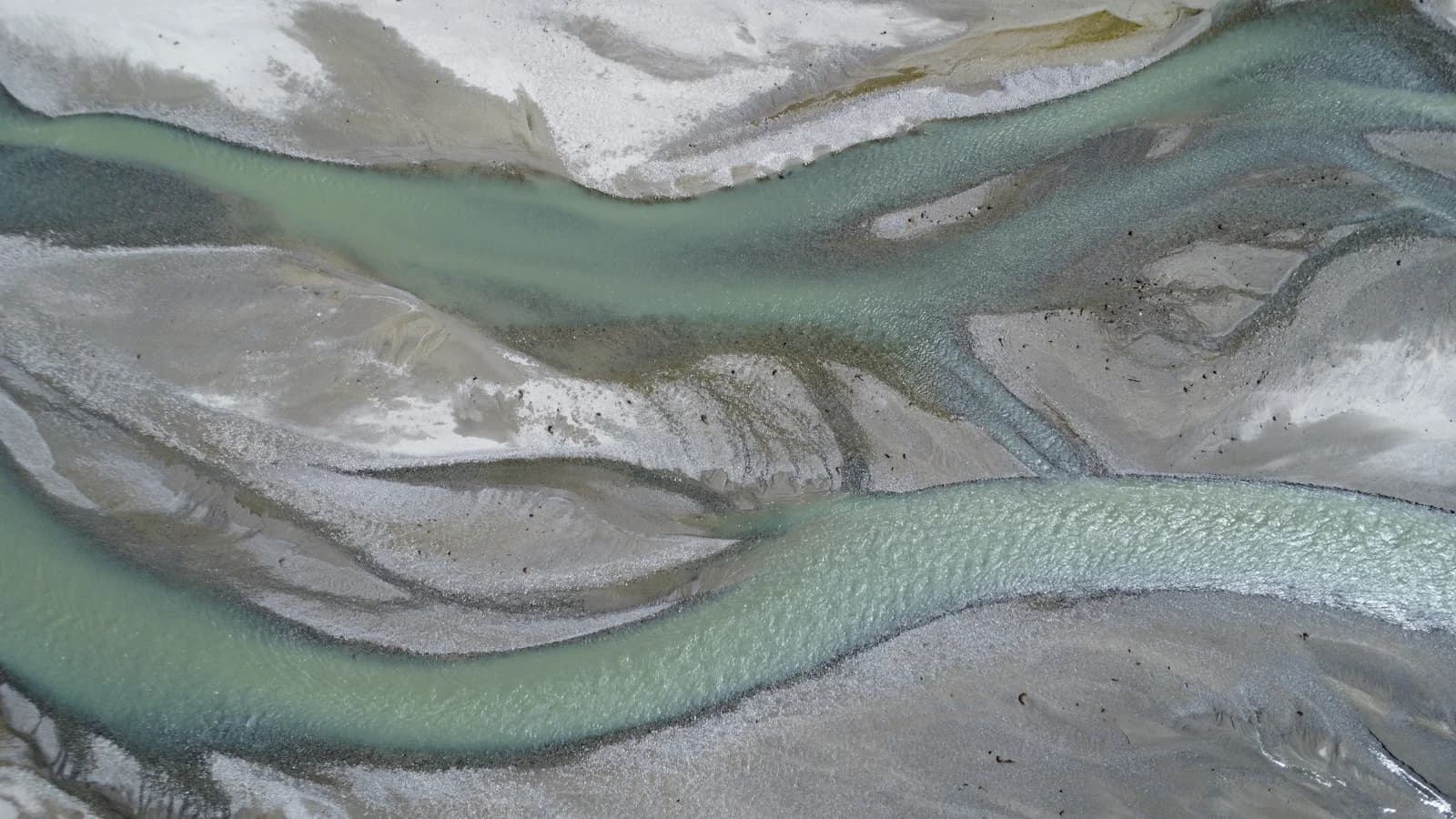
DJI 0117 · Glacial Meltwater Braids
Top-down 90-degree drone capture of turquoise glacial runoff weaving braided channels through gravel plains.
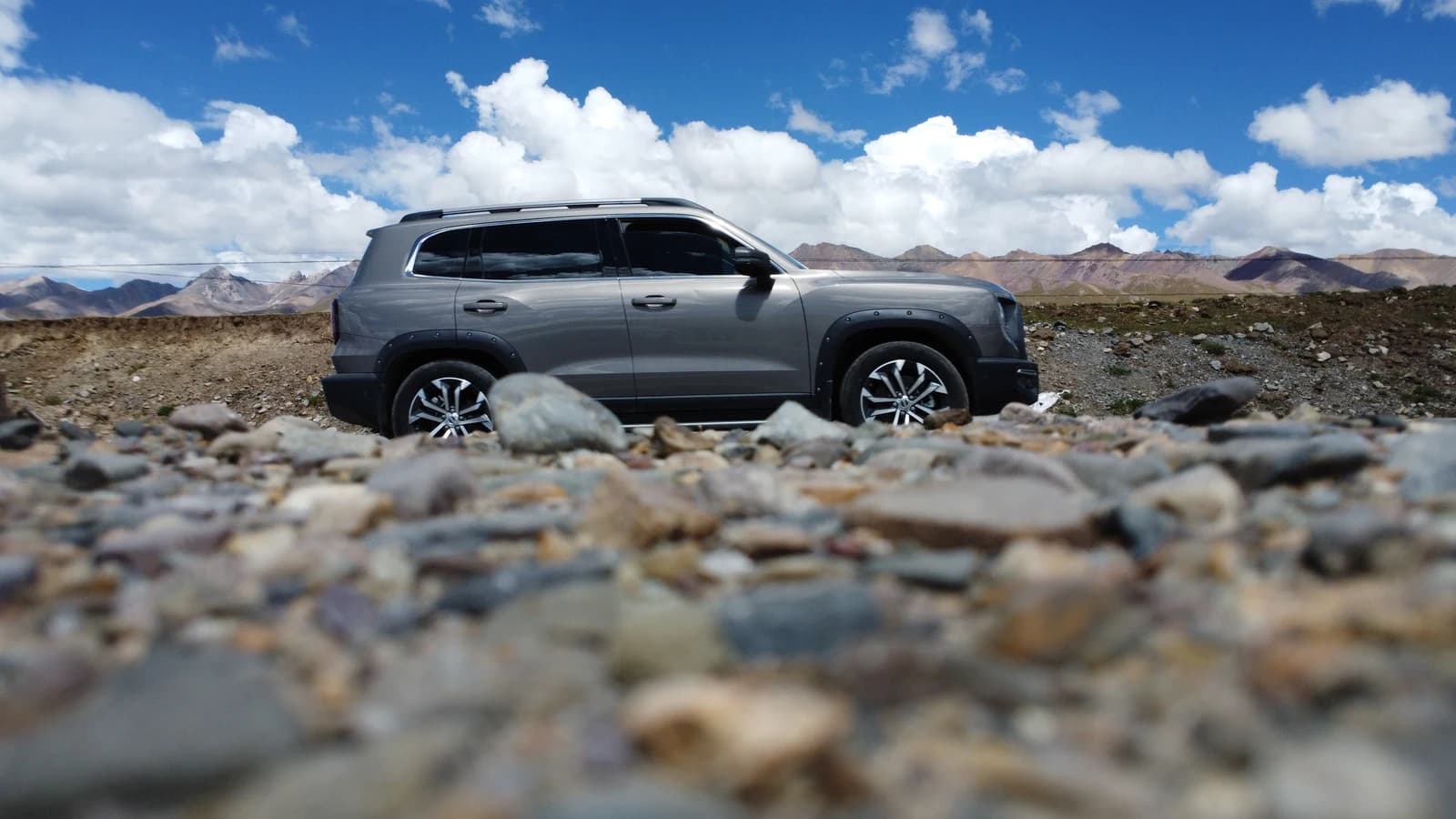
DJI 0086 · Overland Vehicle Staging
Low-angle vehicle capture on rugged highland gravel with snow-streaked mountain peaks rising in the background.
Chronological Field Log: The 17-Hour Emergency Sequence
Every receipt, navigation screenshot, and medical timestamp below is preserved exactly as recorded on September 14–15, 2024.
9 Hours of Smooth Tarmac: Why I Arrived in Nagqu Far Earlier Than Expected
During earlier legs of my journey, daily driving schedules were tight. I frequently arrived at hotels late in the evening and ate very simple meals—quick bowls of noodles, takeout, or packaged snacks. I am not a picky eater and rarely paid attention to dining on the road.
However, the highway from Lhasa to Nagqu is exceptional. Although it spans over 300 kilometers, the entire asphalt highway is wide, smooth, and flat, with very few sharp hairpin turns. I departed Lhasa around 8:00 AM and pulled into my Nagqu hotel at 5:09 PM.
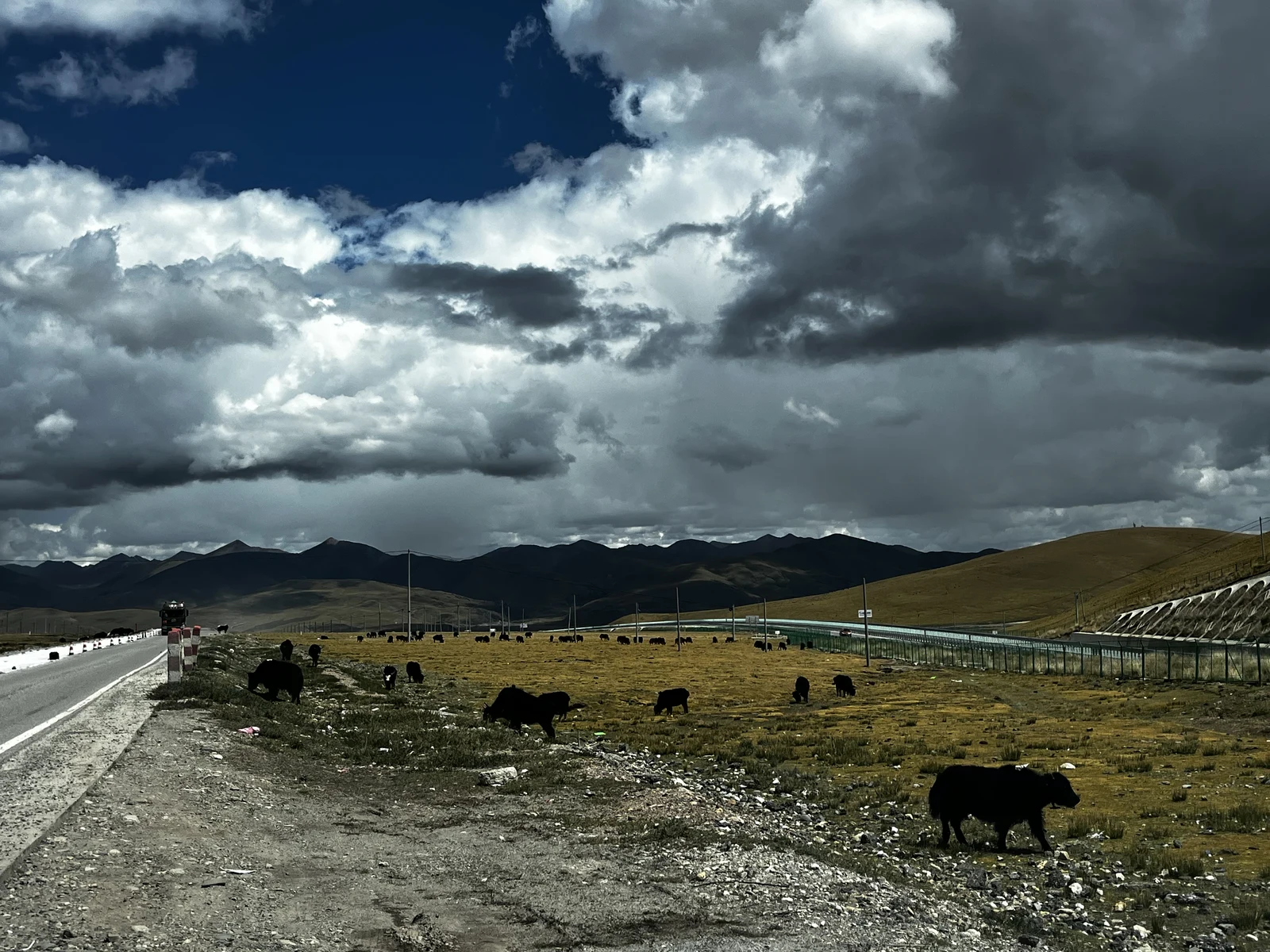
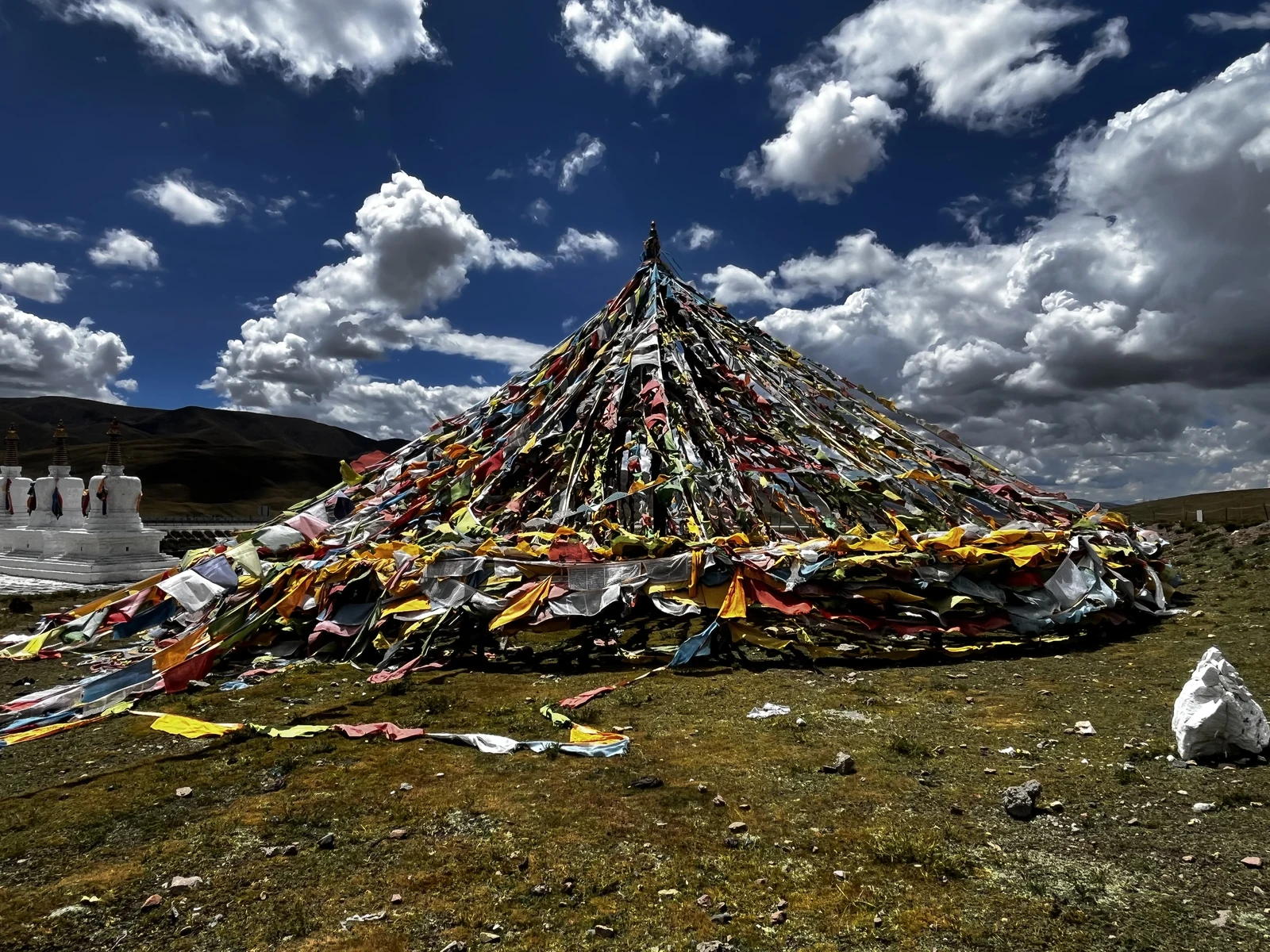
Taking 9 hours for 300 km was not non-stop driving. Along the way, I took lunch breaks, paused at scenic viewpoints to photograph grazing yaks and the sacred Northern Tibet Eight Stupas, flew my drone over alpine wetlands, and chatted with local Tibetan herders. This early arrival was the direct root cause of my altitude sickness: because I arrived so early, I had hours to kill before bedtime, leading to a heavy dinner and wind exposure.
Evening in Nagqu City: Why 'Treating Myself to a Good Meal' Became a Metabolic Disaster
I normally eat dinner early, around 5:00 PM. After checking into the hotel at 5:09 PM, I rested in my room, ate some light snacks I had brought, and relaxed until 6:00 PM.
At 6:00 PM, I took a Didi taxi into Nagqu City center. Even though the main urban area was not far, I follow a strict personal overland rule: I avoid driving in city centers whenever possible. In highland cities, hotel parking spaces are limited; if you drive out and return late at night, you often lose your parking spot entirely. Since Nagqu City is compact and taxis are very cheap, I hailed a cab to stroll through the streets, observe local shops, and watch the Tibetan pedestrians.
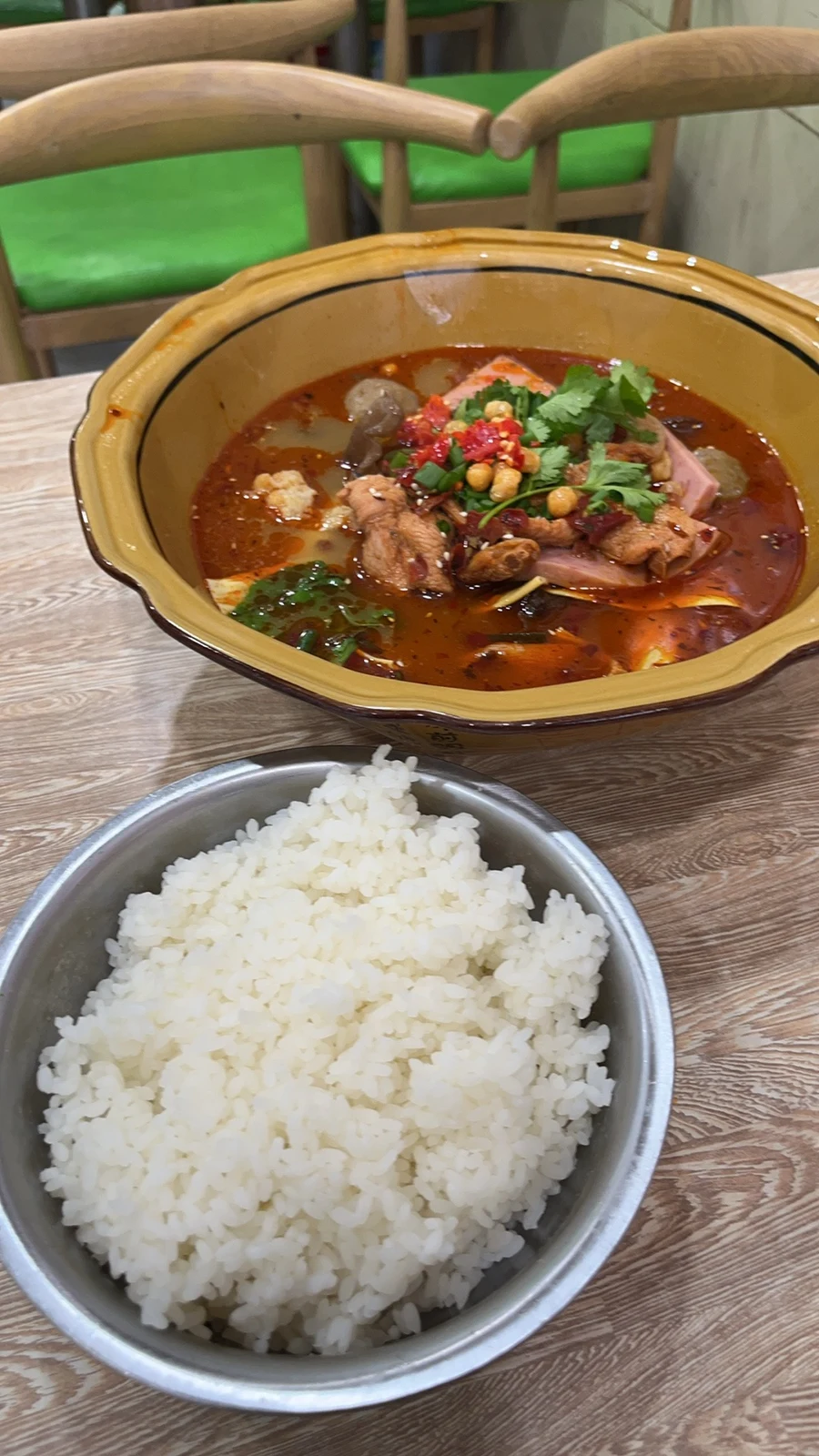
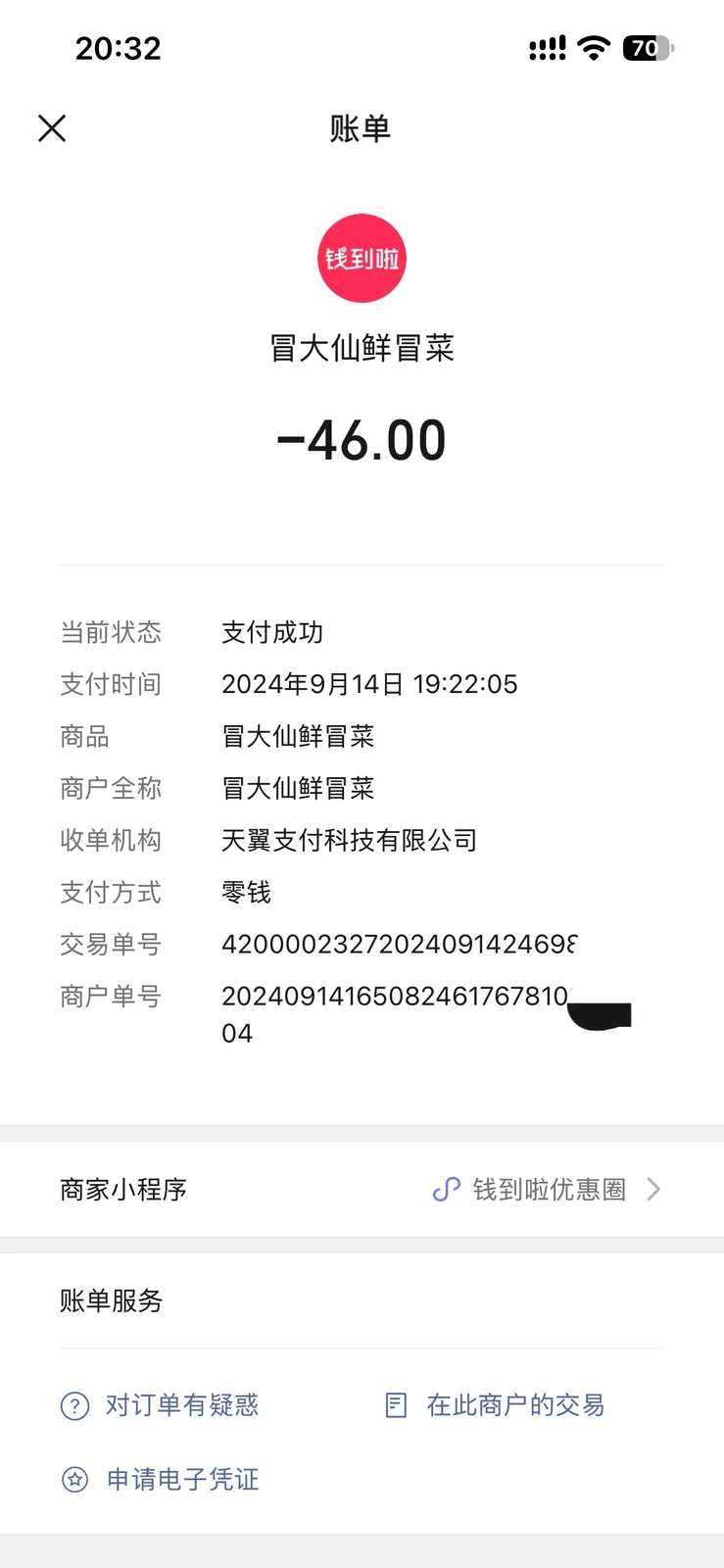
By 6:40 PM, I was genuinely starving. Thinking back to the days of simple instant noodles, I thought to myself: 'I arrived so early today, let me treat myself to a hearty meal!' I walked into a local Maocai restaurant (冒大仙鲜冒菜) and ordered a generous portion. Anyone who has eaten Sichuan Maocai knows the portions are enormous. With a healthy appetite, I ate every bite of meat and vegetables, finished the bowl of rice, and even drank some of the spicy red-chili broth.
I completed payment at 19:22:05 for 46.00 RMB. At 4,500m, this heavy, oily, high-protein, fiery chili feast was a metabolic disaster: digesting heavy fats forced massive visceral circulation to the stomach, siphoning critical oxygen away from my brain.
Flying the Drone at Shenniu Square: The '300,000 RMB Tree' Joke & Harsh Reality
After finishing dinner, I walked about 200 meters to Nagqu Shenniu Square (那曲神牛广场). I unpacked my aerial drone to film the city layout and the surrounding high-altitude plateau.
While the drone was in the air, several local Tibetan children gathered around with curious smiles. I used the drone camera to take photos and videos of them. They were thrilled and had a wonderful time, and I was equally delighted.
After packing up, I took a taxi back to the hotel. I sat down, jotted down travel notes from the past few days, and reviewed photos on my phone and drone.
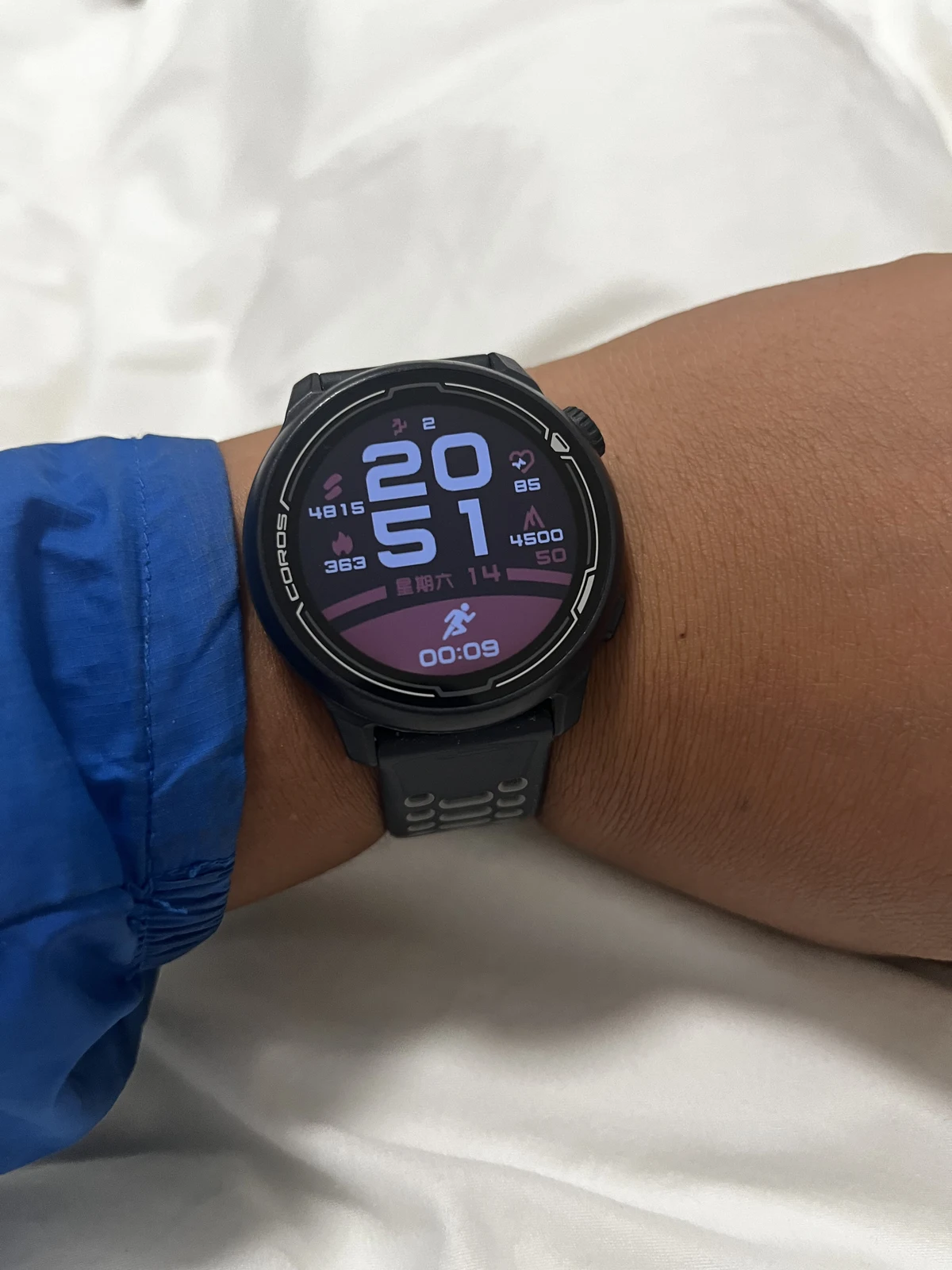
At 20:51, I checked my COROS sports watch: true elevation was exactly 4,500m, and my resting heart rate had climbed to 85 bpm. Unaware of the impending crisis, I went to bed around 9:00 PM.
The 1:00 AM Crisis: Waking Up in Agony, Unmanned District ER & Dash to City Hospital
I went to bed around 9:00 PM. My sleep was extremely shallow. Over the next three hours, I woke up twice with a dull headache. Each time, I thought: 'It's fine, I can just endure it until morning (熬一下就过去了).' That was a critical misjudgment.
By 1:00 AM, the headache exploded into an unbearable, throbbing intracranial migraine. It felt as though a steel clamp was crushing my skull with every pulse. I could not lie down for even a second.
The last time I had felt such severe head pain was 6 years prior, when I visited Seda (色达, 3,800m) for the very first time. I knew from experience that painkillers could not stop this; only clinical medical oxygen could save me. I threw on my winter jacket, grabbed my car keys, and hurried down into the freezing night.
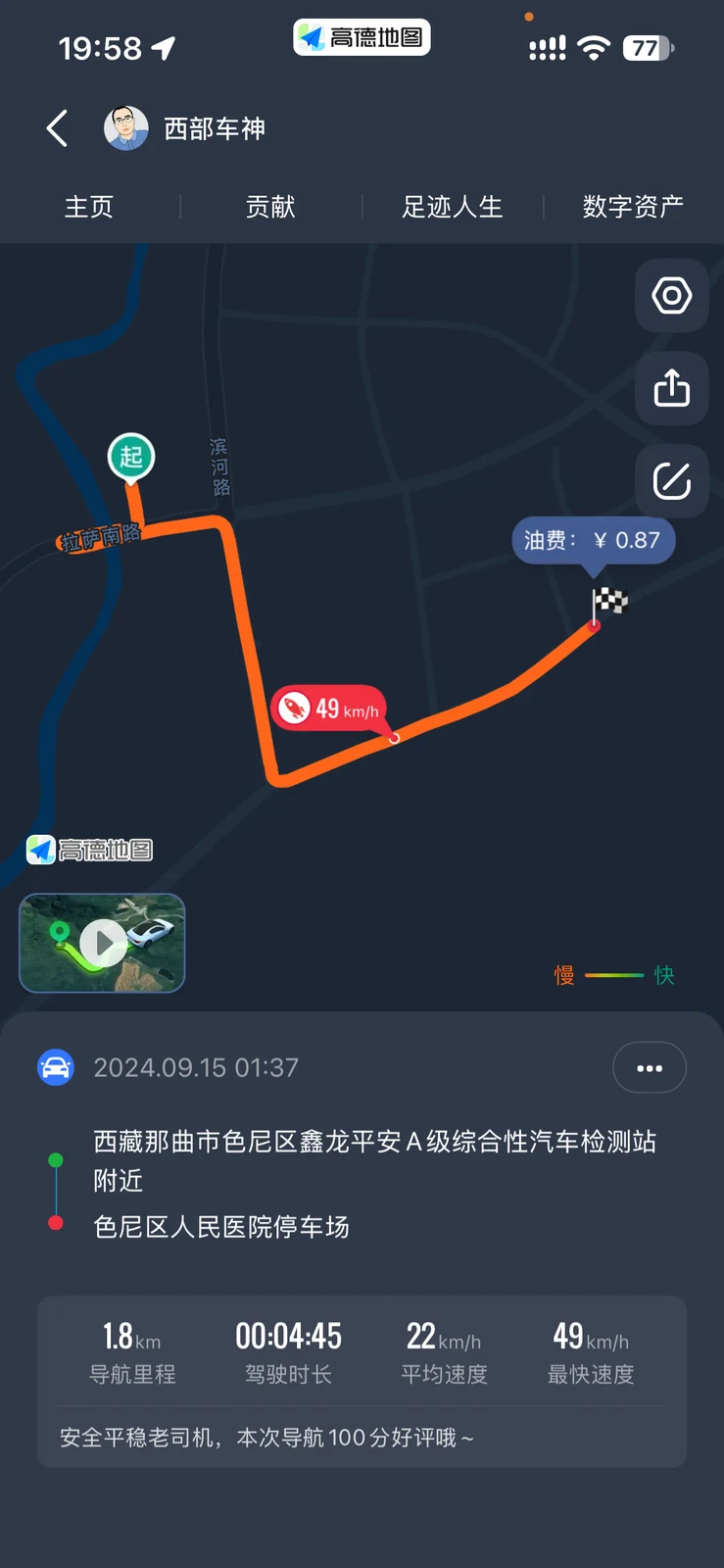
At 01:37 AM Departure, I drove 1.8km to Seni District People's Hospital (色尼区人民医院). When I arrived, the doors were unlocked and lights were on, but NOBODY was on duty in the emergency room! This happened because Nagqu is a prefecture-level city with two hospitals in the urban core; local residents overwhelmingly go directly to the higher-tier City People's Hospital, leaving the district branch's night desk unstaffed. (Important clarification: This does NOT mean county hospitals across the plateau are unstaffed at night—all standalone county-level hospitals across Tibet and G318/G317 always maintain active 24/7 on-duty emergency staff!)
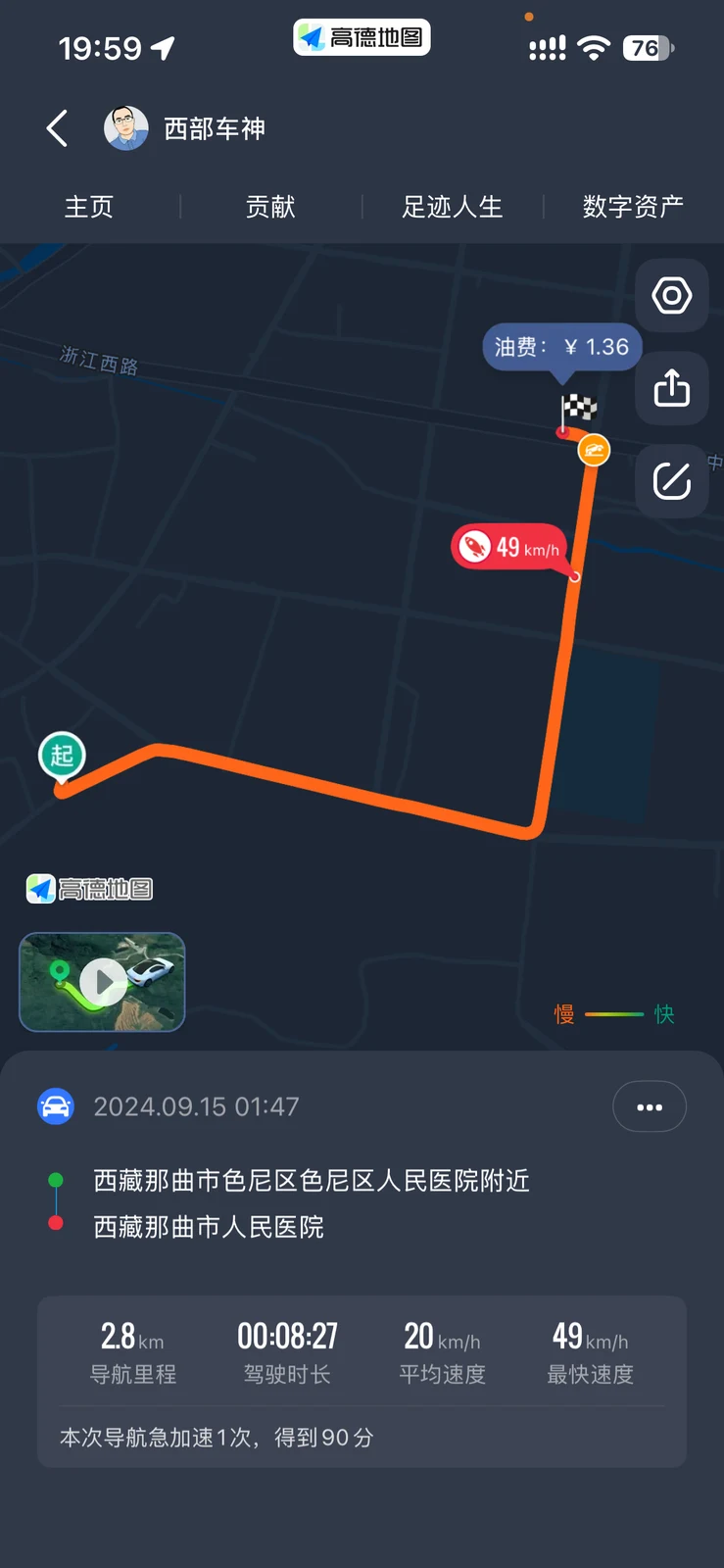
With severe cerebral hypoxia, every minute counts. At 01:47 AM Departure, I sped 2.8km directly to Nagqu City People's Hospital (那曲市人民医院). Gaode navigation recorded my urgent driving with a logged 'Rapid Acceleration 1 Time' (急加速1次). Fortunately, the municipal tertiary hospital was fully staffed with on-duty emergency physicians and nurses.
Oxygen Therapy: Relieved in ~30 Minutes, But Why Resting Until Dawn Is the Golden Rule
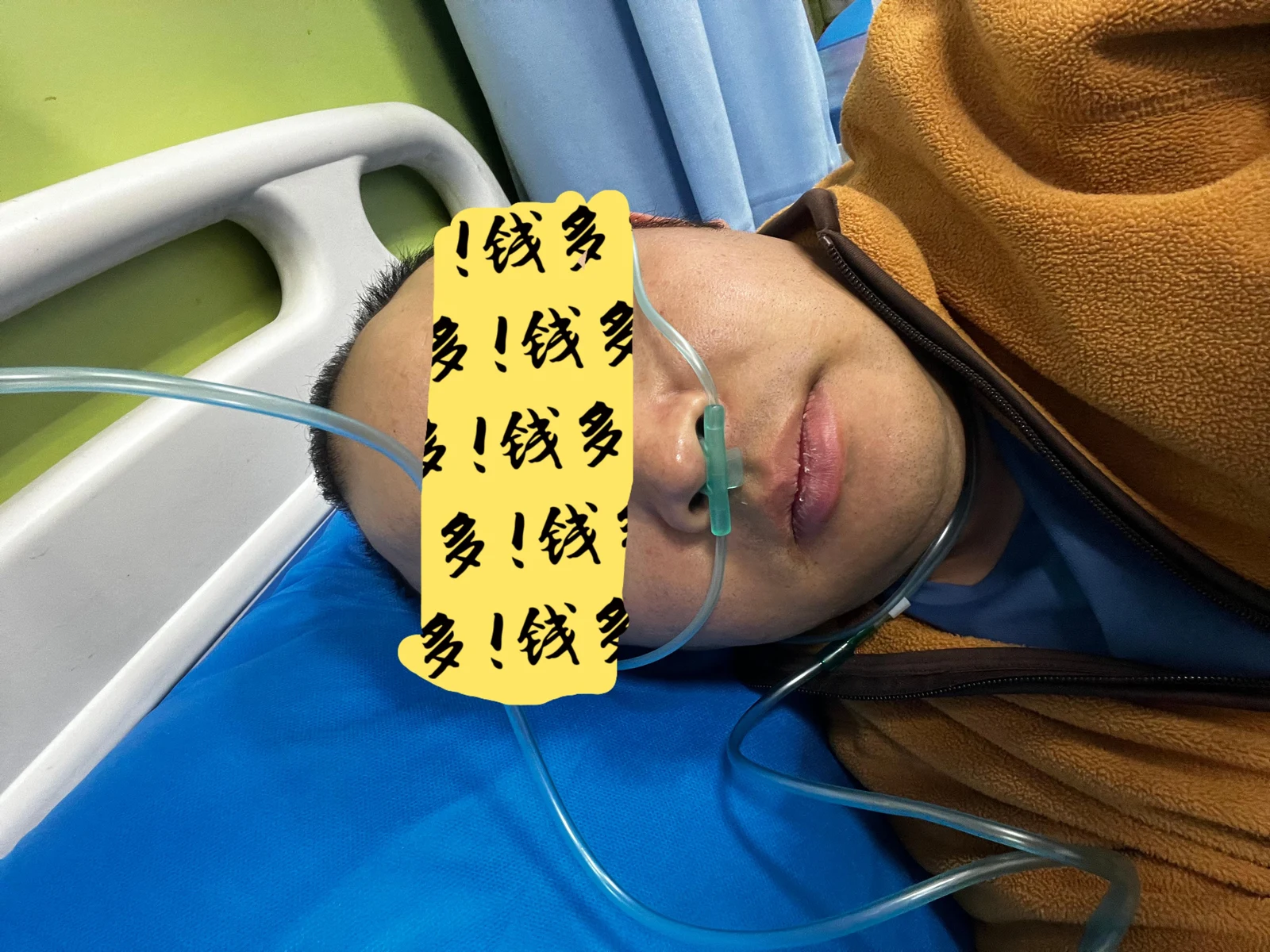
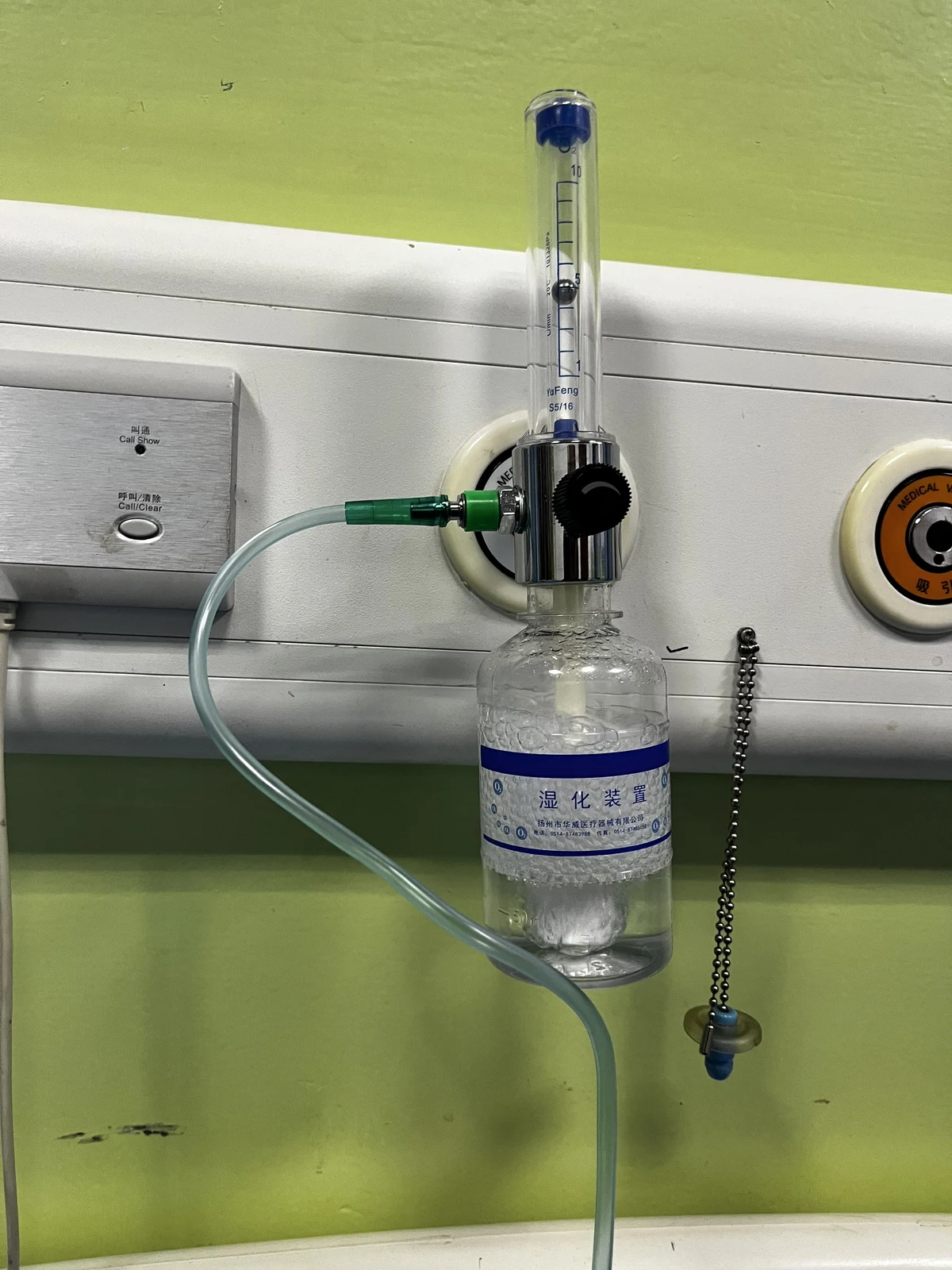
Arriving at Nagqu City People's Hospital, the emergency room was brightly lit with on-duty physicians and nurses. I sat down, was assigned an ER bed, and was connected to high-flow medical oxygen via nasal cannula bubbling through a sterile humidifier bottle (flow rate ~3.5 L/min).
Shortly after, another patient came in—a young engineer working on construction projects in Tibet, also struck down by severe midnight AMS. Together in the quiet emergency room, with the soft bubbling sound of humidifier bottles, we chatted about road conditions, construction, and life on the plateau. We inhaled medical oxygen together until past 6:00 AM.
Within about 30 minutes of continuous oxygen, the blinding throbbing pressure behind my eyes began to dissolve rapidly (individual recovery speed varies, and my solid physical baseline aided fast relief). However, disconnecting oxygen and returning to an unventilated, freezing hotel room in the middle of the night is a severe mistake—tossing and turning back and forth after midnight compounds physical strain and easily triggers rebound AMS. The soundest practical rule is to remain comfortably resting on the hospital oxygen bed until morning, and then depart directly towards lower elevations.
At 06:57:51 AM, I settled the emergency bill at the front desk: nearly 5 continuous hours of clinical central pure oxygen cost exactly 107.00 RMB. Because the construction engineer and I had bonded through the night, I offered him a ride in my vehicle that morning, driving him down to lower elevations together.

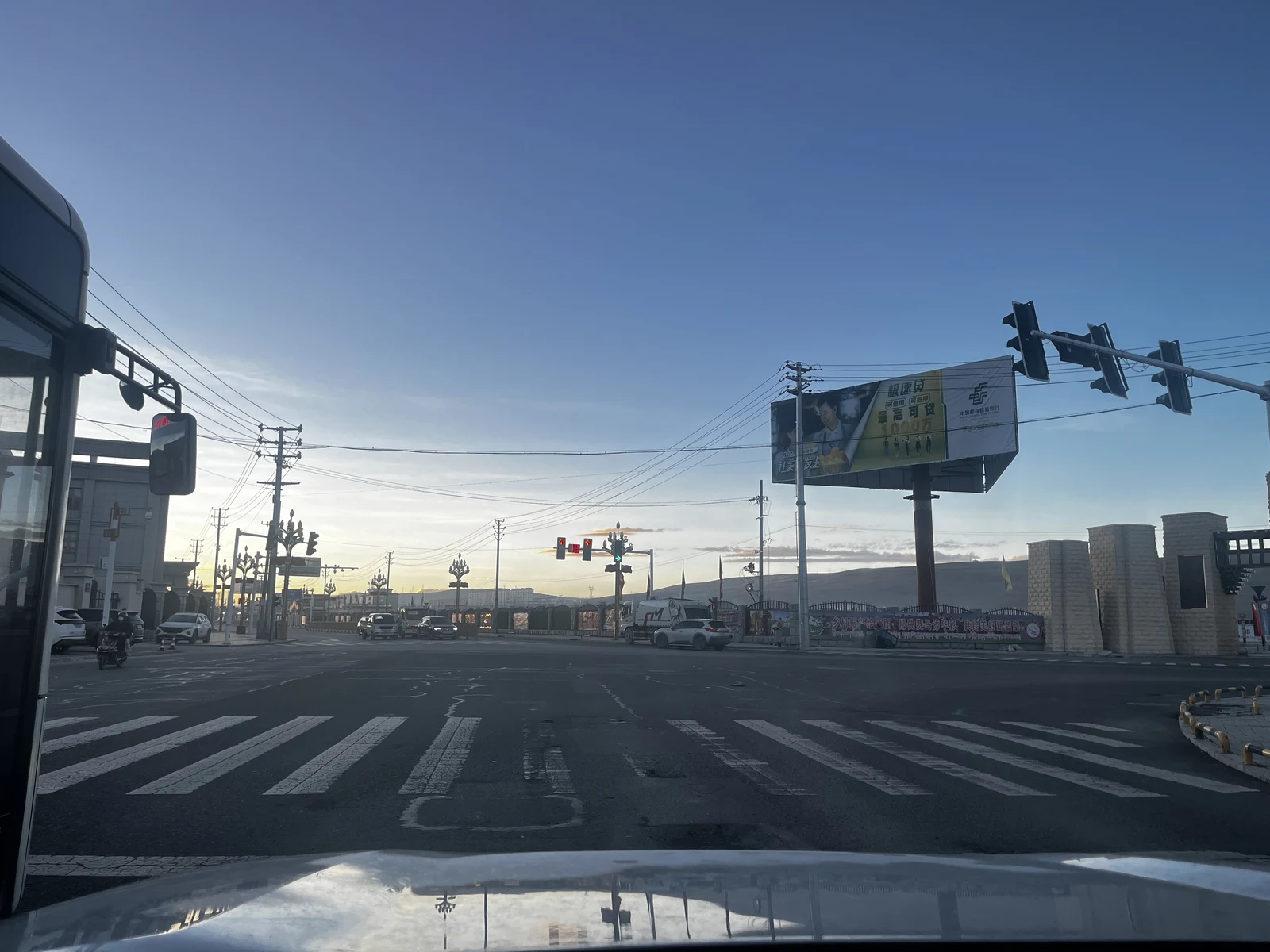
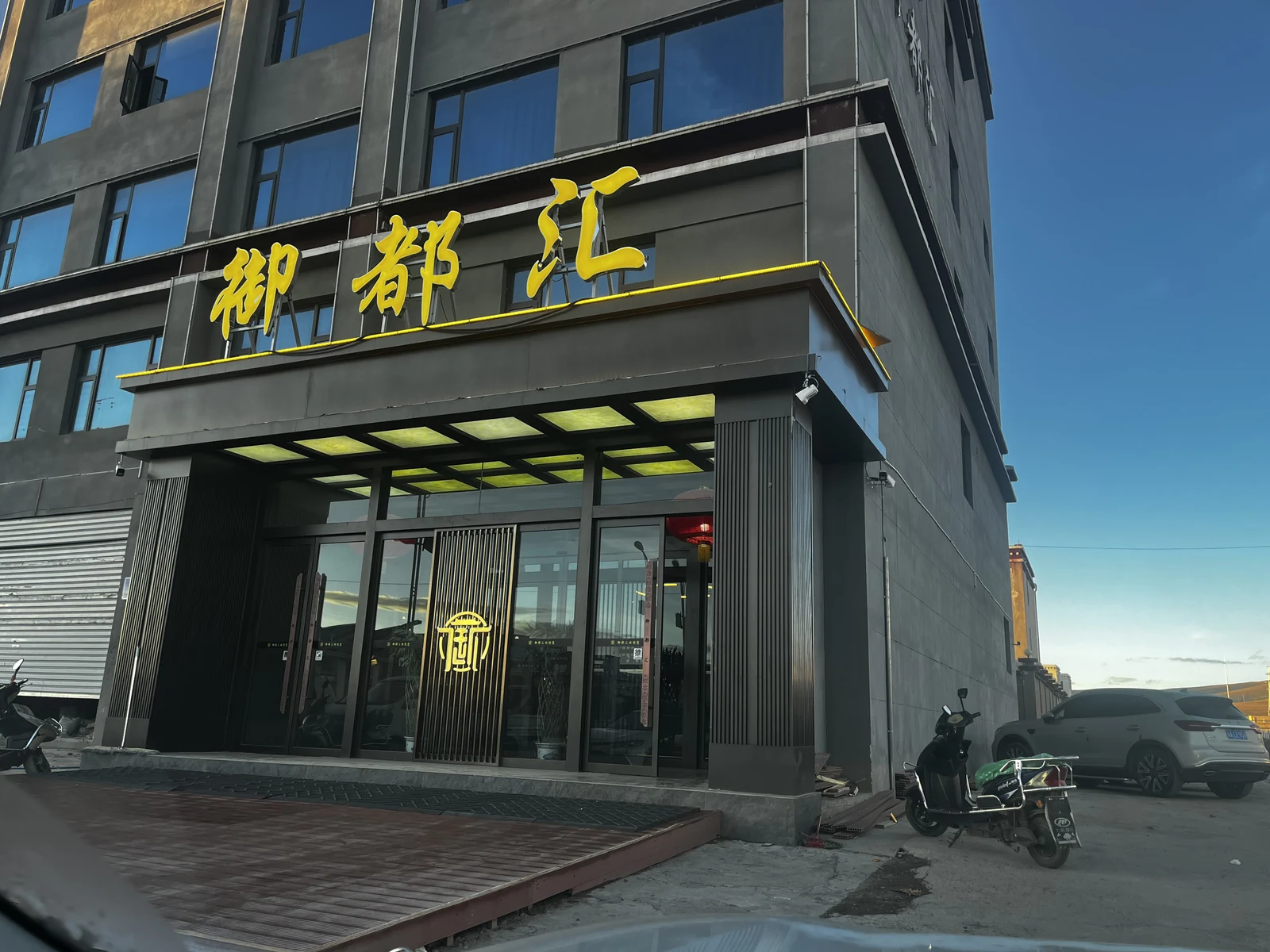
Dawn Crossroads: Picking Up Travel Companion at '御都汇' and Rolling onto G317
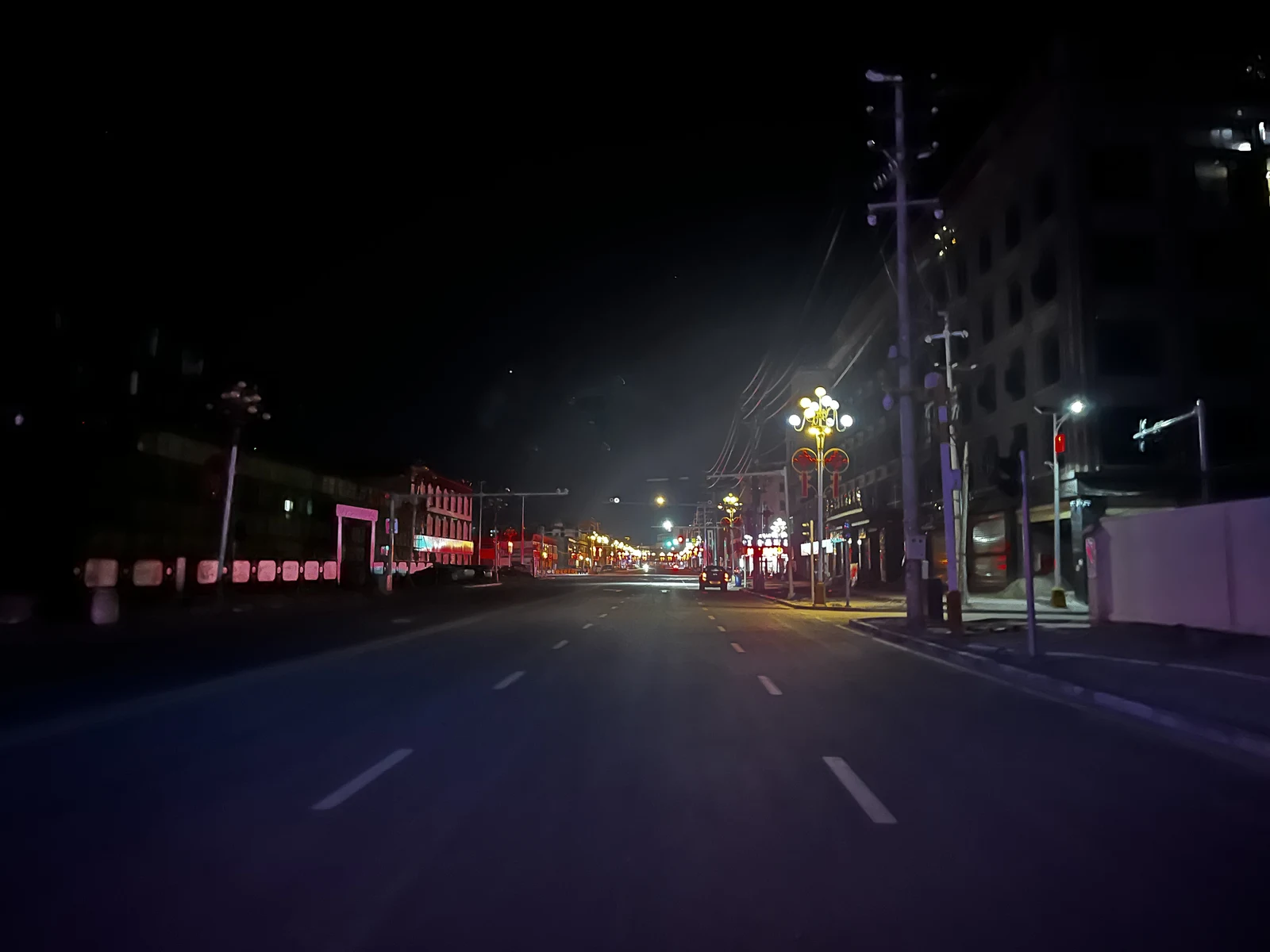
Walking out of the hospital, morning light was breaking across the quiet Nagqu intersection. The air was freezing but refreshingly clean. I drove over to the '御都汇' building to pick up my travel companion as arranged the night before.
Completely rejuvenated, with clear vision and zero headache, we set off along the northern G317 highway descending towards Chamdo and Western Sichuan.
*(Note on departure time: Whether departure was around 6:00 AM or 7:00 AM is best verified by camera metadata, but the essential emergency sequence is permanently etched in memory).*
Why Did I Suffer Severe AMS? The 3 Fatal Traps Analyzed
Most online tutorials focus exclusively on medication (Diamox) or descending elevation. Almost none analyze evening meal composition, hotel architectural partition ventilation, or nocturnal sleeping posture.These findings are drawn from direct bodily experience verified by physiological principles:
Fatal Mistake #1: Heavy, Fiery Red-Chili Maocai Dinner
Fatal Mistake #2: Uninspected Room Architecture (A Sealed Hypoxic Box)
Fatal Mistake #3: Habitual Side-Sleeping Compressing Lung Capacity
Because acute mountain sickness is always most severe at night during sleep!During the day, sympathetic nervous activation keeps respiration deep, fast, and compensatory. At night, parasympathetic tone dominates: heart rate slows and tidal breathing plummets during shallow REM sleep. In an unventilated room, combined with heavy digestive oxygen consumption and lung-compressing side sleeping, SpO₂ inevitably dives below critical thresholds!
Why Portable Canned Oxygen Fails Completely in Severe AMS
Tourists spend hundreds of yuan buying cases of blue spray cans. In true acute altitude sickness, here is the clinical reality between canned spray and hospital central wall oxygen:
| Metric | Portable Canned Spray (~30–50 RMB / can) | Hospital Wall Oxygen (107 RMB for 5 Hours) |
|---|---|---|
| Effective Duration | 2 to 3 minutes of intermittent puffing (20–30 inhalations) | Continuous, uninterrupted 4 to 8+ hours through the night |
| Flow Rate & Purity | Unregulated burst; rapid pressure drop; <50% FiO₂ delivered | Regulated 3–5 L/min medical pure O₂ (>95% pure) |
| Humidification | Bone-dry gas (causes nasal bleeding & painful dry cough) | Sterile water bubbling chamber protects delicate respiratory mucous membranes |
| Clinical Capability | Placebo psychological comfort on passes only; useless in crisis | Reverses acute brain hypoxia, lowers intracranial pressure & halts early HACE/HAPE |
| Cost Comparison | 30–50 RMB per single-use can (tourist highway markup) | 107.00 RMB total for 5 continuous hours at Municipal People's Hospital |
Founder's Solemn Warning: Never Try to 'Tough It Out' (硬扛) in Severe AMS!
Always prepare thoroughly before heading to the plateau. Never fight an unprepared battle. Knowing the medical realities of hypoxia is essential, because ignorance can quickly turn fatal.
When you know these facts and severe symptoms still hit: NEVER try to tough it out!Do not assume your usual physical fitness will pull you through while curling up under the hotel blanket. Toughing it out against intracranial pressure and pulmonary congestion is life-threatening. If you need hospital oxygen, go immediately.
Final reminder: Across my entire 18-day expedition, I had zero illness—no cold, no fever, no preexisting conditions—and yet I still required hospital emergency oxygen. For anyone who already has even a minor cold, high altitude poses an immediate risk of fatal High Altitude Pulmonary Edema (HAPE) or Cerebral Edema (HACE). Never gamble with your life!
Don't Fight an Unprepared Battle: Download the G318 & G317 Survival Field Manual PDF
Contains the verified 25-page hospital-grade AMS clinical emergency protocol, Lake Louise diagnostic scoring card, emergency hospital phone directory (Lhasa, Nagqu, Chamdo, Kangding), and 7 low-altitude safe haven emergency descent corridors.